Episode 3
Your Awakening vs Your Marriage: Should You Stay or Go?
A powerful 5-question litmus test to know when a relationship can evolve with you—and when it’s time to lovingly release it.
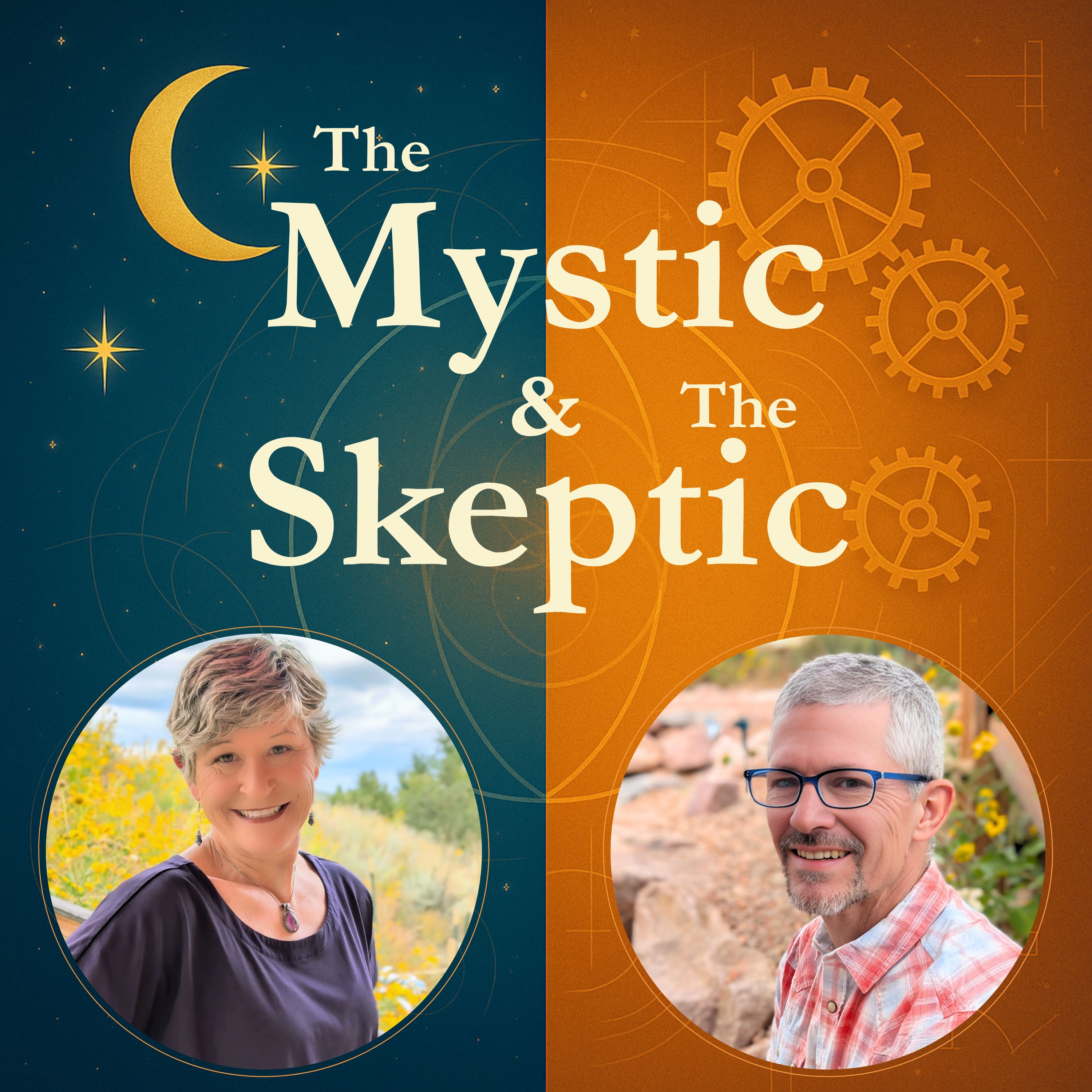
Welcome to The Mystic & The Skeptic, the podcast where spiritual awakening meets real-world relationship dynamics.
🌟 In this episode:
What if the bravest thing you can do… is walk away?
We explore the emotional, energetic, and spiritual crossroads many face during awakening—when you’re no longer sure your relationship can grow with you. You’ll learn a powerful 5-question litmus test to help you discern:
Is it time to stay, or is it time to go?
🌀 We cover:
- Why “love” isn’t always enough to sustain a spiritual partnership
- How to tell when compromise becomes self-abandonment
- The fear of letting go vs. the courage to evolve
- What it means to choose truth over comfort
- Navigating this path without blame, shame, or judgment
This one is deep, honest, and a lifeline for anyone questioning their relationship during spiritual growth.
💬 Join the conversation:
Have you ever had to choose between love and your evolution?
🔓 Aftershow
🎧 Want to go deeper with integration tools and journaling prompts?
👉 Join our private aftershow here or at heatherleighstrom.com/media
🌐 Links & Resources
🔗 Explore everything Heatherleigh offers:
https://www.heatherleighstrom.com
🎙️ Love spiritual deep dives?
Check out our sister podcast:
Awakening Your Spiritual Mastery
📅recorded December 2025
Transcript
Sometimes staying in your relationship is an easy choice, but other times, the most courageous thing you can do is walk away.
Speaker B:In this episode, we explore how to tell the difference and offer five sole honest questions to help you know if it's time to break free or to stay and do the work.
Speaker A:Welcome to the mystic and the Skeptic.
Speaker A:I'm your host, Heather Lee.
Speaker B:And I'm Paul.
Speaker A:And on this show, we explore the raw, honest story of what happens when one partner evolves dramatically and wakes up.
Speaker B:And the other doesn't and maybe has no interest.
Speaker A:Yeah.
Speaker A:Can you guess who is who?
Speaker A:I'm the Mystic.
Speaker A: I Woke up in: Speaker B:I did not wake up and I don't really have an intention to at this point.
Speaker B:At this point.
Speaker A:Yeah.
Speaker A:We don't pretend to know the future, but this is what we are discussing on this show to help others that are in the same shoes as we are.
Speaker B:We get real and honest about the challenges it poses and whether this dynamic is even sustainable.
Speaker A:That's a huge question, whether it's sustainable.
Speaker A:And we're constantly assessing that, so we can't give you the answer yet.
Speaker A:So if you find yourself in this situation, and so many women do, because statistically more women are waking up than men or maybe masculine counterparts, so we find ourselves in this predicament.
Speaker B:Our mission is to provide some clarity and maybe an example to at least provide some comfort in your situation.
Speaker A:And as a bonus, we've actually developed an addendum to this show, a backstage, if you will, to go behind the scenes and have even deeper conversations and provide you with some go to checklist or to tools perhaps that would help guide you through your own process.
Speaker B:So check that out in the description of our show and see how you can join in.
Speaker A:Yeah, we call it the Backstage Pass.
Speaker A:So you'll find it in the description of the show.
Speaker A:And if you can't find that, you can go to my website, heatherleastrom.com media.
Speaker A:And that's Heather.
Speaker A:L-E-I G-H-S-T-R-O-M.com media so go there and get registered and join us in the back office in the Backstage Pass.
Speaker A:Yeah, on the Backstage Pass, because we go even deeper and we share some really raw experiences with you guys.
Speaker A:So join us there.
Speaker A:I don't want you to miss out on that.
Speaker B:But today we're tackling the toughest question of should I stay or should I go?
Speaker A:That's a tough question.
Speaker A:We had that early on, didn't we, Paul?
Speaker B:We did.
Speaker A:That was a scary time.
Speaker A:I mean, and, you know, honestly, we're still evaluating that, and that's what this conversation is about, is sort of our assessment protocol that we follow to know how we're doing and whether it's working for both of us.
Speaker A:Because that's a real conversation you should have with yourself before you have it with your partner.
Speaker B:Right, right.
Speaker A:So what deciding factors can you use to determine the fate of your relationship?
Speaker A:We're going to break it down for you.
Speaker A:We'll break down what's worked for us, and maybe it will provide some clarity for you.
Speaker B:What parameters would define if your relationship is a no go?
Speaker A:So today we're sharing the five questions that we use as a litmus test for our relationship.
Speaker A:And it's really helped out, especially during the toughest season of our marriage, not.
Speaker B:To decide if we're broken, but just to decide if we can still work together and continue to grow.
Speaker A:Yeah, it's a constant assessment process, a checking in, if you will.
Speaker A:And like I said before, it's.
Speaker A:It's not always something we do with each other, but we definitely do it with ourselves.
Speaker A:And if something comes out of it, then we come together on it.
Speaker A:So we're going to be digging into these with you today.
Speaker A:So it's worth noting that after my awakening, or actually during it, there was a point when I wondered if our relationship was going to make it, if our marriage was going to make it.
Speaker A:I didn't want it to fail.
Speaker A:But I also didn't know if being in a relationship that didn't match my frequency or match my aspirations for being spiritual was really going to be beneficial for me.
Speaker B:Right.
Speaker B:And I wasn't really sure what frequency even meant.
Speaker A:Yeah.
Speaker A:Right.
Speaker A:I don't think he still does.
Speaker B:So it was confusing for me, and I didn't really know how to help her or to be a part of the process.
Speaker B:And at times I felt like she was giving me an ultimatum to come along for the ride and try to be on the same page as her with her journey.
Speaker A:Yeah, that was hard.
Speaker A:There were some triggers there, I think.
Speaker B:Because I got to see the journey, not just her, like the final destination, which there may never be a final destination.
Speaker B:But, you know, you get to see things as, you know, constantly changing and evolving, and sometimes that's a hard ride to be on.
Speaker A:Yeah.
Speaker A:When you're used to being in a relationship, that doesn't change much.
Speaker A:Maybe.
Speaker A:But, I mean, I think our relationship historically has always changed direction pretty frequently, but not to this Extent.
Speaker B:Yeah.
Speaker B:A little more extreme.
Speaker A:Yeah.
Speaker A:This was really new for both of us.
Speaker A:So we're going to give you our five point litmus test today and we.
Speaker A:To make sure you understand that this is not designed to place blame on anybody.
Speaker A:It's about getting radically honest with yourself, with your partner and about your relationship.
Speaker B:So we'll kick it off here.
Speaker B:Question number one is, can your partner love you no matter who you're becoming?
Speaker A:Yeah, there's some pretty huge identity shifts, you know, during the awakening process, and that can really feel threatening to the person who's not going through that journey.
Speaker A:I know Paul saw a lot of changes.
Speaker A:You want to mention a little bit about that?
Speaker B:Oh, wow.
Speaker B:Yeah, I mean, the, the changes were in many way positive and I, you know, definitely saw how this process was helping you and you were becoming a better person.
Speaker B:But even if I didn't completely understand everything that was going on, so while I didn't necessarily understand it, I appreciated the, you know, the positive outcome and the results of the process.
Speaker A:Well, we just.
Speaker A:I just have to say something about the language.
Speaker A:You have to be careful becoming a better person.
Speaker A:That's a judgment, right?
Speaker B:Yeah.
Speaker A:So why don't you paraphrase phrase that and what you meant by that.
Speaker B:I guess becoming a happier person of, you know, seeing you have more fulfillment in your life.
Speaker B:Not that.
Speaker B:Yeah, yeah, I see the difference.
Speaker A:But yeah, so be careful when you're talking, talking with your partner, but the language that you use and also use that to identify any deeper conversations you need to have with yourself.
Speaker A:So if you're really judging the process, either for yourself or for your spouse, then that can be a problem and a barrier to growing together.
Speaker A:So be careful, be mindful of that.
Speaker A:But also we want to mention under this heading is that real love, real sustainable love allows, or it should anyway, even if it hasn't before now.
Speaker A:It should allow space for expansion.
Speaker A:It should allow space for growth and for the fact that, you know, people don't stay the same or they shouldn't stay the same.
Speaker A:I know there are some couples who never change.
Speaker A:Especially if you look back at our previous generations, it seems like their relationships never change.
Speaker A:And now my parents did because they had a really rocky, rocky encounter with each other.
Speaker A:But, you know, Paul came from a family that just really didn't change much.
Speaker B:Yeah, it was pretty constant and some great things about that.
Speaker B:But, yeah, different than, I guess our relationship.
Speaker A:Yeah, constant is basically consistent.
Speaker A:Right.
Speaker A:So consistency is comforting, you know, especially when you're a child in that family and you're growing and developing.
Speaker A:So that's a very comforting place to be.
Speaker A:You always know what to expect.
Speaker A:Well, when you open yourself up to change, especially rapid, radical change, that's a lot different.
Speaker A:That means that you don't know what the relationship is going to entail tomorrow.
Speaker A:Like, you wake up today and you're like, yeah, this works for me, but what's going to happen tomorrow?
Speaker A:And is that going to work for me?
Speaker B:Yes.
Speaker B:And you know, we, through our marriage, we both have given each other room to change.
Speaker B:We met, you know, around mountain biking and camping.
Speaker B:And throughout our marriage, we've both gone different directions on hobbies and passions and allowed each other space for that.
Speaker B:Obviously, when you get into the spiritual world, like, it's a little more profound and sometimes a little harder to just kind of weave in and out.
Speaker B:And this definitely presented some challenges to us.
Speaker A:Yeah.
Speaker A:So that's question number one.
Speaker A:Can your partner love you no matter who you are becoming?
Speaker A:And that the biggest question is a question mark on that because you don't know where you're going and your partner can't see the finish line either.
Speaker A:So it's an open ended, you know, scenario.
Speaker A:You don't know what's going to happen.
Speaker A:Can you truly love this person not knowing where it's going?
Speaker A:So that's hard for some people.
Speaker A:All right, what about the second one, Paul?
Speaker B:All right, number two.
Speaker B:So number two is can they allow different personal beliefs without being personally challenged, without being triggered?
Speaker A:That's a big word these days, triggered.
Speaker A:So examples of that would be, you know, having a difference of opinion on spirituality, religion, you could even use politics there.
Speaker A:But we don't want to go there afterlife, you know, having a different opinion on what happens after we cross over.
Speaker A:We die.
Speaker A:Do we reincarnate?
Speaker A:And having a different opinion on consciousness, you know, consciousness is a big part of my reality.
Speaker A:I don't think Paul even knows what it is.
Speaker B:Yeah, it can even be not just a difference in opinion, but a difference in importance or the role that it plays in your life.
Speaker B:And you know, some people are very invested in spirituality or their beliefs, and others like me, may be just a little bit more go with the flow.
Speaker B:And you know, it just doesn't get us as excited as someone else.
Speaker B:So it's, it's not even just having different beliefs.
Speaker B:It's about having a different, you know, a different level of expectation of, of how deep you're going to try to dive into that world.
Speaker A:Being invested in your mindset so much that someone else is some.
Speaker A:Your partner not Sharing that mindset would be a deal break for you.
Speaker A:Right.
Speaker A:So, you know, if.
Speaker A:If we'd answered no to this question, either one of us, this wouldn't have worked.
Speaker A:Right.
Speaker A:So we both have to have an open heart and an open mind about what this looks like for either one of us.
Speaker A:Because at this point, our partnership looks different to me than it does to him, yet it serves different purposes for us.
Speaker A:Right.
Speaker A:So we're okay with that.
Speaker A:So if you answered no to question, then you or whoever answered no, your partner would.
Speaker A:Would really have to think about it.
Speaker A:So sometimes these scenarios where you're not sharing the same belief or the same expectation can create a real sense of inner insecurity.
Speaker A:Right.
Speaker A:Just the fact that your partner isn't agreeing with you as far as where you want to go, how you feel about certain things, and if this is the case and is causing insecurity in one or both of you, then there's some internal work that needs to be done.
Speaker A:If you're relying on what your partner thinks and how your partner feels to define who you are and how you feel about yourself.
Speaker A:So be mindful of that.
Speaker A:You know, when you answer this question, try and answer it with a lot of details so you can identify sources of anything that needs to be further investigated for yourself.
Speaker B:Yeah, I think, you know, we all just need to, you know, be honest with ourselves and have our own, you know, thing.
Speaker B:Mission in life and thing that.
Speaker B:That drives us.
Speaker B:And you realize that that may not be what drives, you know, other.
Speaker B:Other folks, including your spouse, but, you know, you definitely have to have respect and appreciation for the hard work that your.
Speaker B:Your spouse is going through.
Speaker A:Yeah, I mean, we could dig into that a lot further, but we'll leave it for there.
Speaker A:We'll leave it there for now.
Speaker A:Okay, number three.
Speaker B:So number three is, are you okay with having separate interests or growth paths, even travel?
Speaker B:Can you allow your spouse space to go do their own thing?
Speaker A:Yeah.
Speaker A:So there's a big difference between independence and abandonment.
Speaker A:So if you and your spouse are not in agreement with an awakening process, the concept of it, or even spirituality, that means that you're going to have different drive systems, you're going to have different motivators, you're going to have different interests as far as what you do with your life and what's important to you.
Speaker A:And is this okay?
Speaker A:Can you sustain this sort of.
Speaker A:It's almost like a parallel life that you live and you kind of come together occasionally or intermittently.
Speaker A:And that's not easy for some people.
Speaker A:I'm discovering especially I think it's more based on the old style marriages.
Speaker A:You know, usually the people that I run into that would be really weirded out about this, like traveling without your spouse, are older people in their 60s, 70s, maybe 80s.
Speaker A:I don't know.
Speaker A:I think everyone in our age group is okay with it.
Speaker A:What do you think, Paul?
Speaker B:Yeah, I look a little bit like travel for work.
Speaker B:So, you know, it's part of my job.
Speaker B:I sometimes have to travel and that's good to learn how to go see other places and experience them your way and learn how to be self sufficient out there in the real world.
Speaker B:So certainly on a professional level it's always been okay for folks to travel and that really shouldn't be any different than your personal life.
Speaker B:That if someone's passionate about something, they should be able to go do it even if their partner isn't available or want to go on that same journey.
Speaker A:Yeah, and this goes for the spiritual person too, the spiritual partner that's awakening.
Speaker A:You've got to be okay with doing some of these activities on your own.
Speaker A:Like I went to Egypt all by myself.
Speaker A:I'd never left the country.
Speaker A:But I didn't want Paul to go with me because it kind of felt like he would just be a wet blanket.
Speaker A:I had a lot of things I wanted to do spiritually and I wanted to be around people that understood that.
Speaker A:So I was totally okay with Paul being here and me going without him.
Speaker A:So I think that one definitely goes both ways.
Speaker A:You know, both partners need to be okay with that aspect and, and with giving each other space.
Speaker A:But you still have the we component.
Speaker A:Like we still do things together.
Speaker A:It's just different things that aren't necessarily associated with my spirituality.
Speaker A:So we find common ground to come together on still, and we find time to nurture that.
Speaker A:But if either one of you is not okay with having those separate interests and with being independent to a certain extent and you answer no to this question, then you want to really think this through.
Speaker B:Yeah, you're really limiting yourself.
Speaker B:If that's the case, then you have to find that person.
Speaker B:It's almost a carbon copy of you.
Speaker B:And you know, I think that's hard to do, especially as you grow.
Speaker B:And I mean, hopefully we're all changing and growing through our lives.
Speaker B:So it's hard to be the same person, have two people be the exact same all through their.
Speaker B:Their marriage.
Speaker A:Yeah.
Speaker A:And we'll get into this a little bit more later on down the road.
Speaker A:But you know, when two spiritual people come together, this is A lot easier.
Speaker A:So that is an option.
Speaker B:Or harder, depending on if they're both going down the same path.
Speaker A:Yeah, it can be harder too.
Speaker A:It can be trickier.
Speaker A:And that's, that's what I was shown.
Speaker A:So I decided to make a go with this and see what we could do with it.
Speaker A:And I've been really surprised at the results.
Speaker A:Okay, so the fourth question we have for you is, are they willing?
Speaker A:Is your partner willing or are you willing to support you emotionally and financially while you find your footing?
Speaker A:So this is tricky because you may be on totally separate journeys when you start to wake up, and yet you might find that you need to make some really drastic changes in your life, such as change your career, change your lifestyle, the way you dress, maybe the people you hang out with.
Speaker A:Some really big changes might be coming up for you as you grow and into this awakening.
Speaker A:And you might find yourself on very uneven ground or shaky ground or scary ground.
Speaker A:Financially, emotionally, it's a really vulnerable time.
Speaker B:Yes.
Speaker B:And for me it's, you know, the planner who, you know, everything is evolving to a plan.
Speaker B:When things change, well, that requires the plan to change.
Speaker B:So that presents challenges.
Speaker B:But you know, at the same time, you know, as those, as Heather's needs have changed and she's wanted to go do things, then, you know, for me it was a matter of then how do we adopt that to the plan and make it work or, you know, be as adaptable as possible.
Speaker B:And you know, I can, I can think of a case where I don't know that I ever really said no to anything.
Speaker B:But you know, there were times where we had to talk through the financial consequences and how to budget or whether, you know, we should do something this year or whether she should hold off to next year.
Speaker B:So, you know, it's really a two way street, you know, at the same, you know, you do have to make ends meet, but at the same time you need to figure out how to, how to accommodate and support each other both emotionally and financially.
Speaker A:Yeah, we decided to, you know, address this as a team.
Speaker A:But if you have a partner who doesn't understand this and you might need to leave your job and not have another job to back you up at that moment, then, you know, you have to talk that out through with your spouse.
Speaker A:And that's a good question for yourself as far as what do you do?
Speaker A:Because you do have to survive in this world and play the games, even though we don't want to.
Speaker A:So this is a question you need to have with your partner to make sure you're both on the same page.
Speaker A:And it takes a lot of trust for these non believers, the skeptics, really, to hold space for us while we're going through this process.
Speaker A:So it takes a very mature and unselfish partner, which Paul, thankfully, is to allow for these changes to happen without putting limitations on them, without placing expectations on you.
Speaker A:Okay, I'll only give you six months, and then you've got to start, you know, pulling the money in again.
Speaker A:Because our finances shifted quite a bit through this process, so we had to be okay with it.
Speaker A:Both of us did.
Speaker A:But that's a really hard question, I think, for most couples to answer honestly.
Speaker A:You know, I mean, Paul could have told me a lie and then done something completely opposite.
Speaker A:Right.
Speaker A:And there's.
Speaker A:I've seen some couples where there's some bitter backstabbing when they're not speaking the truth.
Speaker A:You know, that can lead to a lot of fights, too.
Speaker B:Yeah.
Speaker B:No matter painful.
Speaker B:How painful.
Speaker B:Honesty is always the.
Speaker B:The most important thing.
Speaker B:And having those discussions, you know, in terms of, you know, there's examples of folks who spent their whole lives saving and saving and saving, and then they go to retire and they don't know what to do with themselves.
Speaker B:So life's a balance.
Speaker B:It's, you know, we want to enjoy this journey that we're on, take time to explore new things and have experiences.
Speaker B:And, you know, a lot of people, people talk about, it's not how much stuff you have, it's the experiences that you have through your life.
Speaker B:And we've certainly had a lot of great experiences and continue to.
Speaker B:And sometimes those experiences, you know, challenge us both to grow and become better people.
Speaker B:So, you know, we might as well enjoy this ride while we're on it.
Speaker A:Yeah.
Speaker A:So just be sure and answer that question number four, really honestly for yourself.
Speaker A:And, you know, hopefully your partner will be honest with you, too, and answer that question as well.
Speaker A:Are you willing.
Speaker A:Are they willing to support you emotionally and financially while you find your footing?
Speaker A:That's a hard one.
Speaker A:Okay, the last question we have.
Speaker B:All right, number five, can they handle the transformation without making it about themselves?
Speaker A:Yeah, this is a big one.
Speaker A:But which one is this for?
Speaker B:I think both, maybe.
Speaker A:Okay, so for the skeptic, it's important that they don't feel like the expansion of the mystic means that they're being left behind or they're shrinking in importance or they're less of a partner.
Speaker A:But it's tricky because, you know, triggers are really.
Speaker A:Well, most people are trigger happy.
Speaker A:Right.
Speaker A:So there's A this can become a trigger for people in a relationship, in a partnership.
Speaker A:We had this discussion this past week, but triggers are hard to identify.
Speaker A:I think we must have discussed this on the backstage last.
Speaker A:For the last episode.
Speaker A:Triggers.
Speaker A:Yeah, we did, didn't we?
Speaker A:Yeah.
Speaker A:So check that out if you haven't listened to it yet.
Speaker A:But triggers are really hard to identify.
Speaker A:And this is the.
Speaker A:For me, it's the trickiest place because if someone is not confident in who they are or they're not connected to their heart space, and really the relationship isn't grounded in that heart space.
Speaker A:If you see someone changing really dramatically, what's the first thing a partner might think?
Speaker A:Like, when they see their partner acting so strange, unlike their normal selves, really happy and giddy all of a sudden.
Speaker A:I mean, I've not experienced it, but I've seen it on tv.
Speaker A:They usually default to, the partner must be having an affair, right?
Speaker B:I guess so.
Speaker A:That's what I've seen on tv.
Speaker B:She watched a lot of tv.
Speaker B:I'm not as exciting as TV characters.
Speaker A:Yeah, Paul's pretty even keel, but no, this is what happens in a trigger is you see someone being really, really happy.
Speaker A:The partner could get triggered into a defense mechanism, into, well, they don't love me anymore or I'm not worthy.
Speaker A:You know, some triggers will come up for them, and it's important that these be addressed.
Speaker A:And the trigger belongs to the person who experiences the trigger, not to the other.
Speaker A:The other player in the story.
Speaker A:So I might do something or say something.
Speaker A:And if Paul had a defensive response to it, it made him angry, it made him feel uncomfortable.
Speaker A:That would be on him to understand why he was feeling that way.
Speaker A:That was a trigger for him to look deeper into his own inner being, his own spiritual growth, to understand himself better.
Speaker A:So triggers are really tricky.
Speaker A:And this is why this one is really a really hard one to navigate.
Speaker B:Right.
Speaker B:Triggers are hard because oftentimes, you know, it's hard for that person who you're talking with to understand, you know, they think they're having a conversation about one thing.
Speaker B:And your trigger may be not necessarily related specifically to that discussion.
Speaker B:It's something that's on the side, you know, a different issue that you have.
Speaker B:And so your reaction really doesn't seem to make sense based on the conversation because you're dealing with a trigger that's something that, whether you admit it or not, is something that you feel like you need to develop or do better at.
Speaker B:And so, again, sometimes make these discussions very hard when you're Upset in a discussion or struggling in a discussion, and it doesn't really make sense to your partner.
Speaker A:Yeah.
Speaker A:So we explored this pretty thoroughly in the backstage episode, the backstage pass of episode two.
Speaker A:If you want to dig in deeper to what we're talking about.
Speaker A:We gave a great example of a trigger and what we did with it, how we got through it.
Speaker A:It's probably the most difficult part of growing as a human being is to identify the triggers and learn how to process them.
Speaker A:It's not hard, but you just have to practice and teach yourself what to do, how to identify, and what to do.
Speaker A:But I think there's another bonus question.
Speaker A:We're going to add number six to this.
Speaker B:Okay.
Speaker A:Okay.
Speaker A:So number five was, can they handle your transformation without making it about them?
Speaker A:Number six is related.
Speaker A:It could be 5A, but we'll say, are they secure enough?
Speaker A:Is your partner secure enough in themselves to handle the fact that you will change maybe a lot through this process?
Speaker A:So I think we've already touched on this a little bit, but it is a good question to add, because the nature of, you know, a spiritual expansion is that you're constantly changing.
Speaker A:I am constantly changing.
Speaker A:Every time I think I know where I'm headed, I completely get derailed and thrown in another direction.
Speaker A:And it's fun for me.
Speaker A:It's exciting, exhilarating.
Speaker A:I mean, I don't know what it looks like from the outside, but I can tell you that my priorities change a lot, a lot over the last three years.
Speaker A:They've changed, and, you know, just about everything else has changed, too.
Speaker A:What are your thoughts on this from your perspective, you know, the skeptic perspective, what would you add to this?
Speaker B:I mean, like, when my wife decides to go travel to Egypt or get a tattoo.
Speaker A:Oh, yeah.
Speaker A:Suddenly, in the last year and a half, I'm obsessed with tattoos.
Speaker A:So I have tattoos all over.
Speaker A:The problem is some of these cost a lot of money, so I haven't actually gotten the tattoos I want to get.
Speaker A:So I've changed a lot.
Speaker A:I used to never want a tattoo.
Speaker A:That's a big.
Speaker A:That's a good example, I think.
Speaker B:You told me you were never going to travel out of the country as well.
Speaker A:Oh, yeah, yeah.
Speaker A:I've always said, my entire life, I have no des to travel out of the country.
Speaker A:Wasn't even going to do it.
Speaker A:Then all of a sudden, I'm getting a passport with no intention to travel out of the country, and before you know it, I'm going to Egypt.
Speaker A:So those are some examples of how things can Change really rapidly.
Speaker A:Oh, before I went to Egypt, I was afraid of heights.
Speaker A:Never wanted to do a balloon ride or skydiving or anything like that.
Speaker A:I did a balloon ride in Egypt and was totally okay.
Speaker A:And now I want to do skydiving.
Speaker B:So I could have never gotten her to do that.
Speaker A:Yeah, you would have had to peel me out of the plane before, but.
Speaker A:So, yeah, so things can change.
Speaker A:Mostly for the positive.
Speaker A:But, you know, if you're dealing with an insecure individual, they may not see that as a positive.
Speaker A:They might see it more threatening than anything else.
Speaker A:And so that can really muddle the waters a bit and make it a lot more challenging.
Speaker A:Communication is key.
Speaker B:Yep.
Speaker B:And then just being open to that growth.
Speaker B:I mean, if you think about your favorite TV characters or movies or stories, you know, there are folks who've a lot of times gone through change and challenge who've, you know, pushed themselves to, you know, do new things, and, you know, that's exciting.
Speaker B:And someone who you're like, wow, that's a cool person.
Speaker B:Well, we can be that too.
Speaker B:But you have to have the freedom to explore and, you know, not just be the same boring person for the rest of your life.
Speaker A:Yeah.
Speaker A:Not to be afraid.
Speaker A:Not to be afraid of change.
Speaker A:And the more you are not afraid of change, you can embrace the change in your partner.
Speaker A:So what do you think?
Speaker A:What do you guys think?
Speaker A:What would you answer?
Speaker A:How would you answer these questions?
Speaker A:Let's list the questions off again.
Speaker A:Number one, can your partner love you no matter who you are becoming?
Speaker B:Number two, can they allow different beliefs without feeling personally challenged?
Speaker A:Number three, are they okay with separate interests or growth paths?
Speaker A:Even if you travel separately?
Speaker B:Are they willing to support you emotionally.
Speaker A:And financially while you're getting your own footing?
Speaker B:Yes.
Speaker A:Number five, can they handle your transformation without making it about them?
Speaker B:And you'll have to do six since you just made it up.
Speaker A:It's on here.
Speaker B:Oh, it's there.
Speaker A:So 5A or number six, are they secure enough in themselves to handle the fact that you will change maybe a lot through this process?
Speaker A:So what we recommend is that you answer these questions for yourself really honestly.
Speaker A:I mean, don't offer the answer that you think would be the best answer.
Speaker A:Answer it honestly for where you are right now, and it might indicate where you need to do some work for yourself in order to elevate the partnership.
Speaker A:You could always start there.
Speaker A:It's always about doing your own work.
Speaker A:And did any of these questions bring something up for you about yourself, or did it highlight something about your partner that maybe you haven't seen or noticed before that you might need to look a little deeper into.
Speaker B:So if you can use this as a conversation starter between you and your partner, this is what we did.
Speaker B:And it really helps illuminate the areas not just where your partner needs to work, but also where you do.
Speaker B:And you got to be willing to do the work if you want to have this discussion.
Speaker A:Yeah, I'm going to remind Paul.
Speaker A:He said that the next time he gives me resistance.
Speaker A:The most important thing I can stress.
Speaker A:I think I've already stressed it twice, but it's good to mention again, we use these questions as a mirror for ourselves.
Speaker A:So I ask myself these questions.
Speaker A:I ask Paul to myself these questions, and guess what he might say.
Speaker A:And then I have an idea of where I'm starting, at least.
Speaker A:And then Paul and I can come together and ask these questions of each other.
Speaker B:Yeah, some of these questions are hard to hear, but they do help you stop talking in circles and actually have a meaningful conversation and help both of us grow, both individually and together.
Speaker A:Yeah.
Speaker A:And try not to get emotional about.
Speaker A:Might bring up some anger, some fear, some resentment.
Speaker A:You know, the triggers are.
Speaker A:The questions are designed as triggers, so identify the triggers when they come up and work through them.
Speaker A:They're designed to uncover what you need to know about yourself and your partnership.
Speaker A:So just see it for what it is and embrace the knowledge you gained from it, and then decide where to go from there.
Speaker A:So usually for us, you know, if we get a no on these questions, then we definitely need to have a conversation.
Speaker A:And it's through the exploration of the conversation where we can get better clarity or maybe have to make a decision.
Speaker A:So, so far, we've been doing really well with this, and our decision is to continue our partnership in a very open, curious manner so that it supports both of us.
Speaker A:But you'll have to see where you land and what you gather from this litmus test, if you will.
Speaker B:So if you find yourself in this kind of situation with your partner, we want to offer you some support with this podcast.
Speaker A:Of course, we've already mentioned a couple times that we are including a Private Solutions segment or our Backstage Pass, where we share a few strategies that actually worked for us and we go deeper into the conversation.
Speaker A:And for this episode, our Backstage Pass segment, I'm sharing a very real moment this week where I blew up because I was craving spiritual partnership and Paul wasn't giving it.
Speaker B:I sensed she might have been triggered.
Speaker B:So, yeah, I just stood there and took it.
Speaker B:And in that moment I realized how deep her grief was.
Speaker B:And the hard part was I didn't know how to help her, but I knew that fighting with her wasn't going to help.
Speaker A:I almost wanted him to fight with me because then at least I could get the energy out, you know?
Speaker A:So you have to be careful of that trap, too.
Speaker A:And thank heavens he didn't fall for the trap, because that was exactly what my ego was doing, was setting a trap for him.
Speaker A:So we're going to talk about what happened and what we did.
Speaker A:We're going to unpack it all for you, how we handled it and how you can meet the same pain with compassion, not rejection.
Speaker A:So join us behind the scenes in our backstage pass.
Speaker A:You'll find the link to that Hero app in the description of this show, or you can go to my website, heatherleestrom.com media that's Heather.
Speaker A:L-E-I G H S T-R-O-M.com backslash media now remember, guys, we are not licensed.
Speaker B:Therapists, but sometimes hearing what worked for someone else can give you just the right spark or even a new insight was possible with your relationship.
Speaker B:Join us to become part of the conversation.
Speaker A:We'd love to hear from you, your questions, your experiences or topics that you'd like for us to cover in future episodes.
Speaker A:So come find us on the Hero app and join us for the rest of the conversation.
Speaker B:And next time, we'll dive into the superpower of getting uncomfortable.
Speaker A:It really is a superpower, so we're going to really unpack that for you and how avoiding discomfort can limit your ability to grow into your highest version and also how it keeps your relationship from growing.
Speaker A:So be sure and join us next time.
Speaker B:Thank you for listening to the mystic and the Skeptic.
Speaker B:We're your hosts.
Speaker A:I'm Heather Lee.
Speaker B:And I'm Paul.
Speaker B:Until next time, stay curious, stay conscious, stay connected.